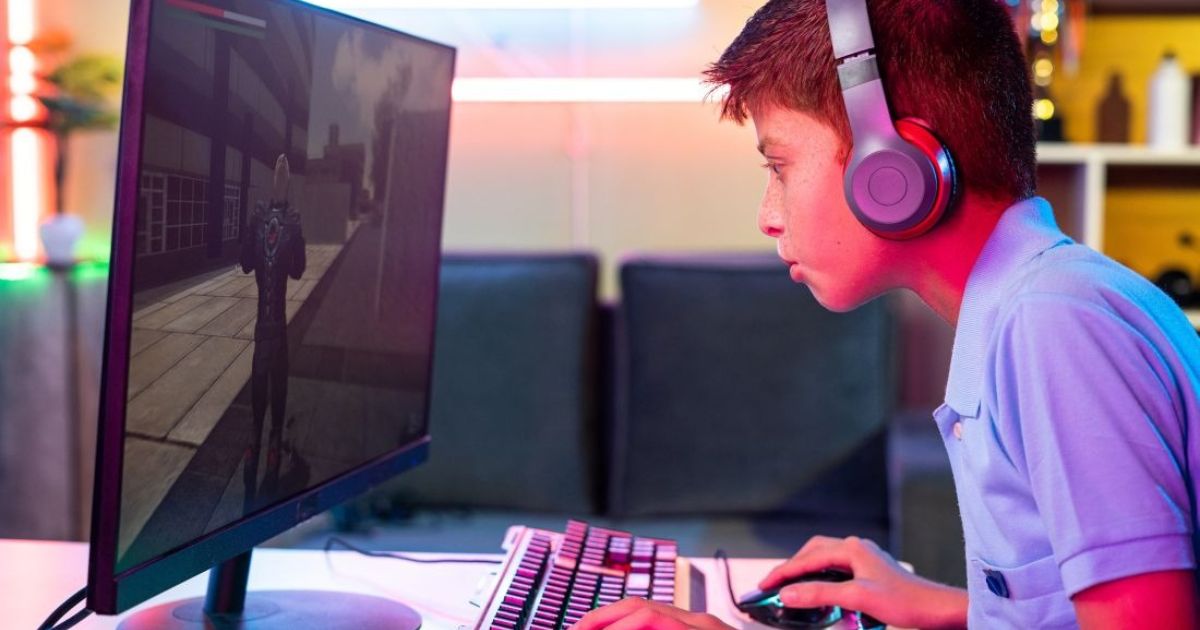
ACER’s 12 years advancing STEM skills video game challenge ends
ACER news less than 1 day ago 4 minute readAfter 12 years championing STEM education through video game development, 2026 marks the end of our highly popular Australian STEM Video Game Challenge.
Since launching in 2014, the free national competition has seen more than 16,000 students in Years 3 to 12 take part.
Leading the way in STEM
As an independent, not-for-profit research organisation, we've long been at the forefront of strengthening science, technology, engineering, and mathematics (STEM) capabilities in Australian schools.
We developed the Challenge as a way of harnessing students’ enthusiasm for gaming as an entry point into STEM learning. Backed by comprehensive, curriculum-aligned teaching resources, the initiative shifted young people from passive consumers of technology to active digital creators, boosting their STEM skills, and inspiring future careers in STEM fields.
Through the end-to-end process of developing a game, participants built critical academic and workplace capabilities:
-
Applied STEM concepts. Designing, coding, and testing original games allowed students to put real-world mathematics, geometry, and computational thinking into practice.
-
Transferable skills. Working through iterative design cycles fostered creativity, teamwork, resilience, and complex problem-solving.
-
Authentic assessment. Entries were evaluated by panels of teachers and industry experts across gameplay, originality, thematic alignment, and each team’s Game Design Document.
-
Inclusive participation. By offering a free, structured, and curriculum-linked program, the Challenge helped break down barriers to STEM engagement for students from diverse backgrounds and regions.
Cathy Zemaitis, Head of Division, Student Learning and Progress at ACER said building STEM skills in young people is critical to their development.
‘STEM skills are something people will use their whole life, from calculating the best deal in a supermarket, measuring a room for new furniture, or figuring out why the Wi-Fi dropped out."
And with jobs in STEM growing twice as quick as non-STEM occupations, Cathy said getting to young people early was vital.
‘The research shows us that we need to reach students by age 15 to influence their long-term participation in STEM, so having them build their STEM skills while doing something they love has been a highly successful approach.’
Adapting to a shifting technological landscape
After 12 years, Cathy said the rapid expansion of the digital landscape has shifted the Challenge away from its original goal.
‘We created the Challenge to build skills like coding and computational thinking, but over time, the tools available to young developers have transformed dramatically.
‘The decision to conclude the competition reflects the rapid evolution of game development and the growing presence of generative AI in digital creation.
‘And while these emerging technologies offer new creative possibilities in classrooms, they also make it increasingly difficult for judging panels to verify original student authorship and fairly assess foundational coding and problem-solving skills,’ Cathy said.
Today, widely accessible generative AI platforms can rapidly write code, debug software, generate visual assets, and draft narrative design documents.
Cathy said the rise of AI also offered up new and exciting opportunities.
‘The conclusion of the challenge allows ACER to shift its focus to educational initiatives and assessment models designed to meet the realities of an AI-enabled learning environment.’
Ongoing resources and pathways for educators
While 2026 marks the final year of the competition, we will continue to support teachers and students with evidence-based assessments, research, and accessible STEM programs.
Educators can continue to access the Challenge's free curriculum-aligned teaching and student resources, including a 10-week unit plan and classroom lesson activities, on the website until the end of Term 1, 2027.
Secondary teachers seeking collaborative, real-world STEM initiatives are also encouraged to explore our International Mathematical Modelling Challenge, which tasks students with applying mathematics to solve complex practical problems.